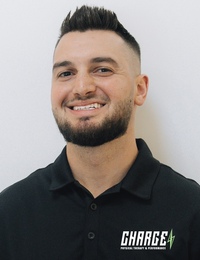
40 milliseconds. Tearing your anterior cruciate ligament (ACL) only takes a fraction of a second. These 40 milliseconds can alter the course of your life (Patel, ACL Ath). The rehabilitation process following ACL injury is a tedious journey which requires a lot of hard work and dedication to not only recover physically but mentally. Your physical therapist should act as a guide along the journey, if not it may leave you not achieving your goals/returning to prior level of function. My name is Dr. Matt Feder and the following blog post will cover how important it is to choose the right practitioner and facility to complete your ACL rehab in Miami.
Before we get into that, here's a brief explanation of the ACL. The ACL is a ligament inside your knee joint that runs north to south. This ligament is considered one of the primary static stabilizers of your knee joint. It restricts hyperextension and provides rotational stability to the joint. It is commonly injured in a hyperextension or valgus moment (when the knee caves inwards). In addition, it's common to see injuries where the leg is fixed and the upper body rotates causing excessive rotational stress to the knee joint. Most commonly occurs in activities such as skiing, snowboarding, and more rigorous hiking. Contact injuries commonly happen in American football, when a tackler hits the knee from the front or outside. Unfortunately ACL tears are extremely prevalent within the population and may even occur during tennis, pickleball, soccer, and falls. The reconstructive surgery is done by replacing the torn ends of your ACL with a graft harvested from elsewhere in your body or from fresh cadaver specimens. If you have more specific questions about the ACL or your knee in general please email us at drmatt@chargephysio.com
Now, back to the focus of this article
The following are things to consider when choosing a practitioner/facility for ACL rehab:
Does the clinic have the right equipment?
- I'm starting with this point because this is potentially one of the biggest red flags of a physical therapy clinic and one of the easiest ones to catch. During ACL rehab, regaining strength is one of the most important goals. If the clinic you're considering does not have weights greater than 10 pounds, it may not be equipped for late-stage rehabilitation. You will need progressive resistance to restore and improve strength following surgery. Our goal at Charge Physical Therapy and Performance is to help you return stronger physically and mentally than you were before your injury.
- New research suggests that testing your strength (especially of the quadriceps) is very important to returning you back to your sport, hobby, and/or job safely. If the clinic does not have a dynamometer (a device with a sensor used to accurately measure strength) they are most likely guessing that your strength is sufficient to progress through the rehab continuum. Don't get me wrong, there are other functional ways to look at your strength and clinicians have been doing fine without them in the past. However, this is the most measurable way to ensure you are making the strength gains you need to succeed.
- Evidence-based technology: blood flow restriction (BFR) is a modality we may use early in rehabilitation to support strength and neuromuscular control. Research suggests it can improve strength and affect markers including insulin-like growth factor (IGF) (Yinghao et al., 2021). Charge Physical Therapy and Performance is equipped with automated blood flow restriction units.
Does the clinician have experience treating patients after ACL reconstruction? Have they had ACL surgery themselves?
- The feelings you will have in your knee are very unique to ACL surgery and can only be understood by a clinician that has vast experience treating them and/or has been through it themselves. It's important that your physical therapist can appreciate the ups, downs, and little nuances of ACL rehab. In addition, being very familiar with timelines of healing, graft incorporation/ligamentization, and the most up-to-date post-operative protocols is crucial. I've been through an ACL surgery and rehab myself therefore, I have the empathy and perspective to understand what my patients are feeling throughout the process. If you are reading this because you had a recent ACL reconstruction surgery in the Miami and Miami Beach area, I would LOVE to help you on your journey to a full recovery!
Dealing with this right now?
Get a 60-minute, one-on-one evaluation and a clear plan - not another generic protocol.
Do they actually care?
- This is perhaps one of the most important points; however, it may be difficult to recognize initially. I truly care about the outcomes of each of my patients. My goal is to help you return to what you love doing as soon and safely as possible. Unfortunately, some clinicians lose sight of this due to burnout or loss of passion and become what I call "9-to-5 PTs." They clock in and out, going through the motions. They aren't appreciating the individuals in front of them or their livelihoods. I'm passionate about ACL rehab because I was a patient who received subpar care before I became a DPT. I've experienced both poor and excellent physical therapy.
- Do they care enough to stay up to date on the latest research? Utilizing the best available research evidence allows us to improve outcomes.
Will they challenge you enough?
- After ACL surgery, a phenomenon called arthrogenic muscle inhibition (AMI) can occur. Swelling in the knee joint may inhibit the muscles of the leg, particularly the quadriceps. This can cause weakness and visible muscle atrophy on the involved side. Strength asymmetry may persist for one to two years after surgery, which is why progressive strength challenges are important. We also work to restore strength in the hips and core, along with endurance and aerobic capacity throughout the process.
Do they provide patient-centered care?
- If your physical therapist is constantly running around because they are treating three or four people at the same time, it can be difficult for them to properly supervise and progress your exercise. In addition, manual therapy requires dedicated one-on-one time. At Charge Physical Therapy and Performance, every session is completely one-on-one with your physical therapist. Working on an out-of-network basis allows our clinicians to be fully present with each client. These quality standards help ensure that you progress each visit with functional, task-specific activities.
If you just had ACL surgery, or are preparing for surgery, and are looking for a physical therapy clinic in the Miami or Miami Beach area to complete your rehab, we check all of these boxes. Don't hesitate to reach out. We look forward to helping you get back to doing what you love.
References
- Patel, Ravi. The ACL Athlete Podcast. 40 milliseconds. 2021
- Yinghao L, Jing Y, Yongqi W, Jianming Z, Zeng G, Yiting T, Shuoqi L. Effects of a blood flow restriction exercise under different pressures on testosterone, growth hormone, and insulin-like growth factor levels. J Int Med Res. 2021 Sep;49(9):3000605211039564. doi: 10.1177/03000605211039564. PMID: 34486432; PMCID: PMC8424606.