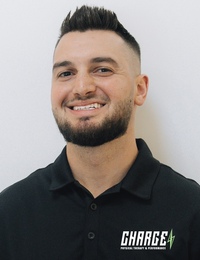
If you're reading this, chances are you or someone you know is dealing with low back pain. You're in good company - research estimates that up to 84% of adults will experience low back pain at some point in their lives (Balagué et al., 2012). It is one of the leading causes of disability worldwide and one of the most common reasons people visit a physician. I'm Dr. Matt Feder, and after years of treating backs of all kinds here in Miami at Charge Physical Therapy and Performance, there's one message I find myself repeating more than any other: your back is stronger than you think. This post will cover what low back pain actually is, why it happens, and why physical therapy should be your first stop - not your last resort.
First, take a deep breath
Here's something that may surprise you: the vast majority of low back pain is NOT caused by serious damage. Most episodes are what we call "non-specific" low back pain, meaning there is no single scary structure to blame. Even more surprising - findings like disc bulges and degeneration show up on MRIs of people with NO pain at all. One landmark study found disc degeneration in 37% of pain-free 20-year-olds and 96% of pain-free 80-year-olds (Brinjikji et al., 2015). These changes are often the wrinkles on the inside - a normal part of living, not a life sentence.
Why does this matter? Because fear is fuel for pain. Research consistently shows that fear-avoidance beliefs (thinking your back is fragile and avoiding movement to protect it) are associated with worse outcomes and prolonged disability. Your back is one of the strongest structures in your body. It is built to bend, lift, twist, and carry. Our job is to remind it of that.
Why is it happening?
Low back pain is usually multifactorial. Some of the most common contributors I see in the clinic include a rapid spike in activity your body wasn't prepared for (a new gym program, a move, a long flight followed by golf), prolonged sedentary time and deconditioning, poor sleep, high stress, and simple strength deficits in the hips, core, and back itself. Notice a theme? Just like the tendon issues I've written about previously, it often comes down to load exceeding your current capacity. The solution is rarely rest - it's building capacity back up in an intelligent, graded way.
Dealing with this right now?
Get a 60-minute, one-on-one evaluation and a clear plan - not another generic protocol.
What about imaging? Don't I need an MRI first?
In most cases, no. Clinical guidelines recommend against routine imaging for low back pain in the absence of red flags (such as significant trauma, unexplained weight loss, fever, or changes in bowel/bladder function - things we screen for at your first visit). Unnecessary imaging can actually make outcomes worse by creating fear around normal age-related findings. As direct access providers in the state of Florida, physical therapists can evaluate you without a referral, screen you for anything serious, and get you started on treatment immediately - often the same week your pain starts.
What will we do in physical therapy?
Everything starts with your goals - returning to the gym, playing with your kids, sitting through a workday without pain, getting back on the pickleball court - because the plan is built around them. Treatment typically includes education so you understand your pain and stop fearing it, hands-on manual therapy for short-term relief, specific movements to reduce symptoms, and most importantly a progressive strengthening program for your trunk, hips, and legs. Exercise is the most consistently supported treatment for low back pain in the research (Hayden et al., 2021) - but only if it's supervised, progressed, and adjusted as you improve, which is how we run every visit at Charge Physical Therapy and Performance.
Why act now?
Seeking care early matters. Studies have shown that early physical therapy after an episode of low back pain is associated with lower rates of opioid prescriptions, spinal injections, advanced imaging, and surgery - along with lower overall healthcare costs (Fritz et al., 2012). The longer pain hangs around, the more the nervous system adapts around it and the longer it takes to resolve. Don't wait for it to "just go away" for the third time this year.
If you're dealing with low back pain in the Miami or Miami Beach area - whether it started yesterday or ten years ago - email me at drmatt@chargephysio.com and let's build you a stronger back.
Dr. Matt Feder, DPT, CSCS
References
- Balagué F, Mannion AF, Pellisé F, Cedraschi C. Non-specific low back pain. Lancet. 2012 Feb 4;379(9814):482-91. doi: 10.1016/S0140-6736(11)60610-7.
- Brinjikji W, Luetmer PH, Comstock B, et al. Systematic literature review of imaging features of spinal degeneration in asymptomatic populations. AJNR Am J Neuroradiol. 2015 Apr;36(4):811-6. doi: 10.3174/ajnr.A4173.
- Hayden JA, Ellis J, Ogilvie R, Malmivaara A, van Tulder MW. Exercise therapy for chronic low back pain. Cochrane Database Syst Rev. 2021 Sep 28;9(9):CD009790. doi: 10.1002/14651858.CD009790.pub2.
- Fritz JM, Childs JD, Wainner RS, Flynn TW. Primary care referral of patients with low back pain to physical therapy: impact on future health care utilization and costs. Spine (Phila Pa 1976). 2012 Dec 1;37(25):2114-21. doi: 10.1097/BRS.0b013e31825d32f5.